
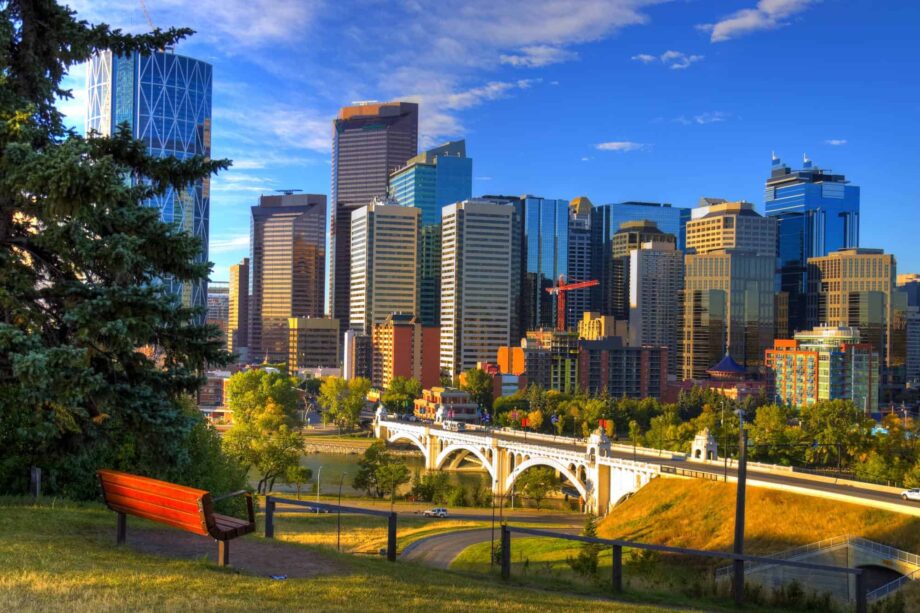
Claim Refugee Status in Alberta
Claim Refugee Status in Alberta
Introduction
Canada is internationally recognized for its strong commitment to human rights and humanitarian protections. Alberta, one of Canada’s largest and most diverse provinces, plays an important role in welcoming refugees fleeing persecution, war, and violence. Whether you're arriving through an international border, at an airport in Alberta, or already present in the province, you may have the right to claim refugee status.
This guide explains how individuals can claim refugee status in Alberta, covering the eligibility criteria, step-by-step procedures, necessary documentation, and what to expect during and after the process. Whether you are already in Alberta or considering it as your destination, this guide provides a practical overview tailored to the province’s unique refugee settlement landscape.
Part 1: Understanding the Canadian Refugee System
1.1 Legal Framework
Under this law, a person may be granted protection as a:
-
Convention Refugee: Someone who has a well-founded fear of persecution based on race, religion, nationality, political opinion, or membership in a particular social group.
-
Person in Need of Protection: Someone who, if returned to their country, would face a risk to life, torture, or cruel and unusual punishment.
Both types of applicants are eligible to make refugee claims in Canada, including in Alberta.
Part 2: Who Can Claim Refugee Status in Alberta?
To qualify for refugee protection in Alberta:
-
You must be physically present in Canada. You can claim at an Alberta airport (such as Calgary or Edmonton International), a land border, or from within Alberta itself.
-
You must not be inadmissible for serious criminality, security concerns, or other disqualifying reasons.
-
You must have a well-documented fear of return to your country of origin due to persecution or danger.
Part 3: Where to Make a Refugee Claim in Alberta
3.1 At a Port of Entry (POE)
If you arrive at an Alberta international airport, you can declare your intention to claim refugee protection immediately to the Canada Border Services Agency (CBSA). The officer will determine if your claim is eligible and, if accepted, will start the process.
3.2 Inland Claim in Alberta: Claim Refugee Status in Alberta
If you are already inside Alberta, you can make a refugee claim at an Immigration, Refugees and Citizenship Canada (IRCC) office. You must submit an online application through Canada’s refugee portal and later attend an interview.
In Alberta, IRCC offices in Calgary and Edmonton commonly handle refugee claims.
Part 4: Refugee Claim Process Step-by-Step: Claim Refugee Status in Alberta
4.1 Completing the Application
You must fill out the following key documents:
-
Basis of Claim (BOC) Form: This is your story. You must explain in detail why you are afraid to return to your country.
-
Generic Application Form (IMM 0008)
-
Schedule A – Background Declaration
-
Schedule 12 – Additional Information
All forms must be complete, accurate, and submitted in English or French. You will need legal identification, such as a passport, birth certificate, or national ID.
4.2 Submitting the Application
Online applicants in Alberta will receive a confirmation number and instructions for submitting biometrics (fingerprints and a photo), attending an interview, and scheduling a medical examination.
Applicants at a port of entry will be given a refugee claimant document and instructions for their Refugee Protection Division (RPD) hearing.
Part 5: Waiting for Your Refugee Hearing
5.1 Refugee Protection Claimant Document (RPCD)
This document proves that you are a refugee claimant in Canada. With it, you can access public healthcare in Alberta, get a work permit, and apply for social assistance.
5.2 Work and Study Permits
You may apply for a work permit while waiting for your hearing. Alberta employers do hire refugee claimants, especially in hospitality, construction, and service sectors.
Students may also attend school. Children of claimants can enroll in public schools in Alberta free of charge.
5.3 Legal Aid and Support
Legal representation is crucial. Alberta has refugee legal aid services that help low-income claimants access a certified immigration lawyer.
Organizations in Calgary and Edmonton also offer:
-
Interpretation and translation services
-
Housing referrals
-
Mental health support
-
Language classes (ESL)
Part 6: The Refugee Hearing in Alberta: Claim Refugee Status in Alberta
6.1 The Refugee Protection Division (RPD): Claim Refugee Status in Alberta
The RPD of the Immigration and Refugee Board (IRB) holds your hearing. The hearing may take place by video conference or in person.
You must prove:
-
That you are who you say you are
-
That you have a credible fear of returning
-
That your country of origin cannot protect you
Bring all supporting documentation, such as:
-
Police reports
-
Hospital records
-
Media reports
-
Witness letters
-
Identity documents
-
Proof of political/religious/social affiliations
6.2 Hearing Outcome: Claim Refugee Status in Alberta
After your hearing, the RPD will either:
-
Accept your claim: You become a protected person.
-
Reject your claim: You may appeal or apply for a Pre-Removal Risk Assessment (PRRA).
Part 7: What Happens After a Successful Claim?
If you are accepted:
7.1 Protected Person Status: Claim Refugee Status in Alberta
You will be designated a Protected Person and may apply for Permanent Residency (PR) in Canada.
7.2 Applying for Permanent Residency
You must:
-
Submit your application through IRCC.
-
Provide biometric data again (if needed).
-
Undergo medical exams and police checks.
Processing times vary but generally take 12–24 months.
7.3 Access to Services in Alberta
As a protected person or permanent resident, you gain access to:
-
Alberta Health Care Insurance Plan (AHCIP)
-
Employment programs and skills training
-
Family support services
-
Education and child care subsidies
Part 8: If Your Claim Is Rejected
If your refugee claim is denied, you may still have options:
8.1 Appeal to the Refugee Appeal Division (RAD)
You have 15 days to file a notice of appeal and 30 days to provide full arguments.
8.2 Judicial Review
You may ask the Federal Court of Canada to review your case. A lawyer must handle this process.
8.3 Humanitarian and Compassionate (H&C) Application
If you have built strong ties in Alberta or face hardship if removed, you can apply for permanent residency on humanitarian grounds.
8.4 Pre-Removal Risk Assessment (PRRA)
Before deportation, you may have one last chance to argue that it is unsafe to return to your country.
Part 9: Challenges for Refugee Claimants in Alberta
9.1 Housing
Affordable housing in Alberta is limited, especially in major cities like Calgary and Edmonton. Claimants should seek support from immigrant-serving organizations.
9.2 Language Barriers
Many claimants struggle with English. Alberta offers free ESL (English as a Second Language) programs through schools and community centers.
9.3 Mental Health and Trauma: Claim Refugee Status in Alberta
Refugees often carry emotional scars. Alberta health services and NGOs provide free trauma-informed counseling for those in need.
9.4 Employment: Claim Refugee Status in Alberta
Though Alberta has job opportunities, refugee claimants may face challenges due to:
-
Language proficiency
-
Lack of Canadian work experience
-
Ineligibility for certain regulated professions
Career counseling, resume assistance, and employment readiness programs are widely available.
Part 10: Support Organizations in Alberta
Numerous agencies provide free or low-cost help to refugee claimants in Alberta. These organizations assist with:
-
Filing applications
-
Legal referrals
-
Shelter and food access
-
English classes
-
Parenting support
Most major Alberta cities, including Lethbridge, Red Deer, Grande Prairie, Edmonton, and Calgary, have local offices that serve newcomer communities.
Conclusion
Alberta offers a safe and welcoming environment for people seeking refuge from violence, persecution, and oppression. Canada’s refugee system is designed to uphold international human rights and ensure that people with legitimate fears are protected. While the process is complex and sometimes overwhelming, Alberta’s strong network of legal aid, community organizations, and settlement services can guide you every step of the way.
If you are considering claiming refugee status in Alberta, preparation is essential. Understand your rights, seek legal advice, gather your documents, and remain honest and consistent throughout your claim. With the right support, many claimants go on to build successful, fulfilling lives as permanent residents and eventually Canadian citizens.
In case, if you need help with Claim Refugee Status in Alberta or other provinces of Canada, please fill in application below or contact us directly.